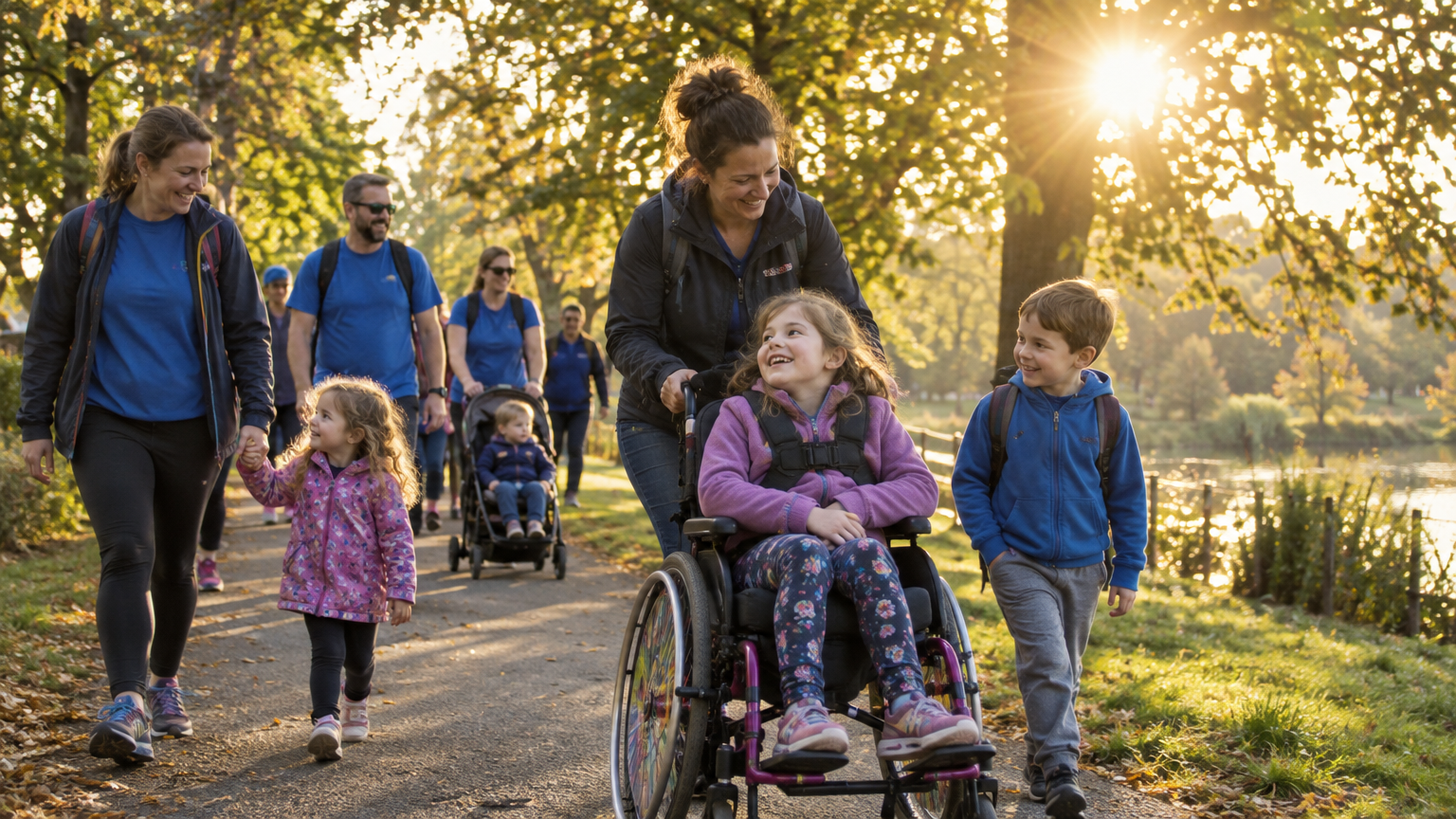
A small charity with one clear purpose: to make SMA easier to carry
The Annabelle Rose Foundation was founded in Annabelle Rose's name by the family who loved her. We exist so that other families facing spinal muscular atrophy find practical help and human kindness, not just a diagnosis.
In her mummy’s words
Annabelle’s story
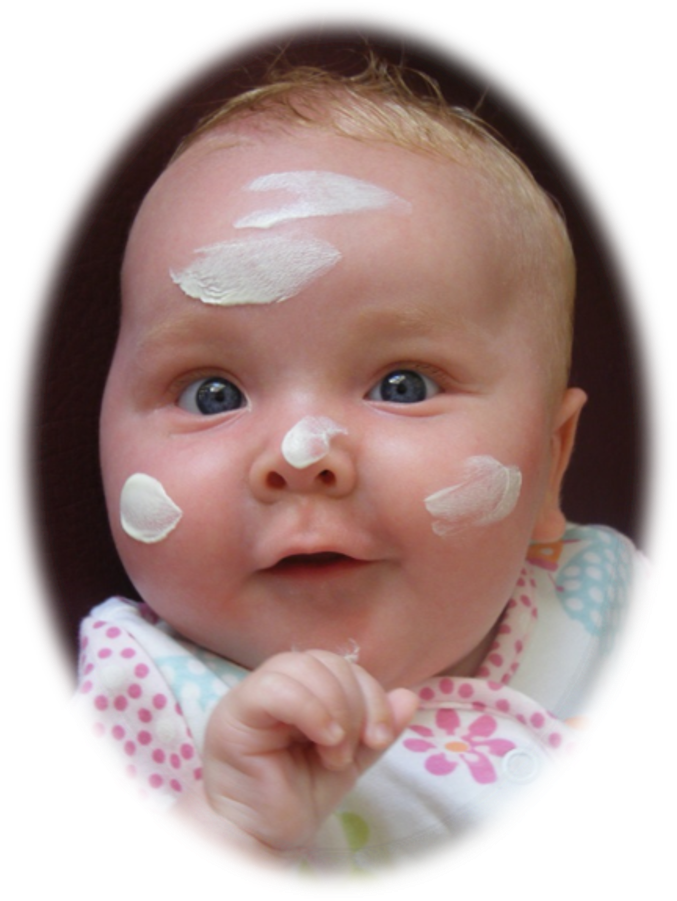
Annabelle Rose Burfitt was born on 18 January 2008 at 20:16, after a very long labour. She was mine and Wayne’s first baby and meant the world to us.
The most perfect baby
Annabelle was truly beautiful. Her skin was flawless, her eyes huge and sparkly. She could not have been prettier if she tried.
When she was six weeks old our health visitor noticed she was not holding her head. I thought nothing of it. She was my first baby, so I had no one to compare her to. I assumed she was a little lazy. At her eight week check I mentioned it to the GP. She did not seem too concerned either, but booked an appointment with the paediatrician, six weeks away. I thought by then she would be holding her head anyway.
At ten weeks we took her to Mallorca to stay with friends who had a baby, Maisie, three weeks older. The first time I held Maisie I thought something was not right with her. She could take her weight on her feet and danced around. Annabelle was not like that at all. It never occurred to me that it was my baby who had the problem.
The magazine that changed everything
A few days after we returned, I picked up a magazine at my nan’s house and came across the story that changed my life forever: “She couldn’t lift her head”. It was about a little girl who, just like Annabelle, could not support her head. She had spinal muscular atrophy type 1. There was a box with the tell-tale signs: frog-like legs, a sunken chest, head to one side. That was Annabelle.
I took the article home and researched SMA. I looked at photos of babies with type 1 and they were all so strikingly similar: their eyes, their smiles, their hands turned outwards, their legs like frog’s legs. The worst of it was that most of them did not reach their first birthday. Everyone thought I was overreacting. But I knew the truth.
The diagnosis
My GP did not realise what SMA was. My health visitor did, and arranged for me to go back the next day. The GP said I might be able to see the paediatrician privately if I paid. I just needed to know. He agreed to meet us at A&E at four o’clock that day. My auntie came with me because Wayne and my mum were at work.
I remember waiting. It was horrendous. The paediatrician did little tests, looking for the tell-tale signs, speaking his doctor language to a colleague while Annabelle became irritable. He was a lovely doctor and I can still see the sorrow in his eyes as he told me he was 90% sure she had SMA type 1. My whole world collapsed. My beautiful baby girl was going to die and there was nothing I could do about it. No cure, no treatment. Just take her home.
On Friday 11 April we took Annabelle to Great Ormond Street Hospital for the tests that would confirm it. She was nearly three months old. They told us she would probably live until she was seven months, and that we should take her home and enjoy the time we had with her.
“I could not believe they were just sending us away. I had to do something. There must be something I could do to save her.”
Fighting for help
We asked everyone to carry on as normal with us. We did not want pity. We wanted our friends and family to be there and help carry us through the most horrendous thing anyone has to go through.
I found an article about a little girl in America with type 1 who was having clinical trials. Her grandmother gave me the details of a brilliant doctor in London on the International Care committee for SMA. She was wonderful from the start. She said I would need to be referred, so back to my GP I went. We were referred to the Royal Brompton, where Annabelle was finally assessed. She was the first positive person we had seen. She booked a sleep study and arranged NIV in the form of BiPAP for Annabelle to sleep with at night, in the hope her lungs and the muscles around them would become stronger.
The sleep study came round and Annabelle slept with BiPAP like a dream. She was amazing. We took the machine home confident she would be great with it. It lasted a while, but she soon got fed up. It was awful putting her on it every night, but we were trying to do what was best. Her levels at the Royal Brompton were always really good, which showed her breathing was not affected at night. She appeared to be quite strong.
Annabelle was never a great feeder. It was not that she could not do it, she just was not interested. Her weight gain was poor, so she was introduced to Infatrini, which at first she loved. We were inundated with visits from physiotherapists, occupational therapists and community nurses. Some weeks it was too much and I just wanted to lock myself away with my baby girl. But I kept going, because I wanted to do whatever we could.
The Jennifer Trust
After Annabelle’s diagnosis we were given the details of the Jennifer Trust, the biggest national charity dealing with SMA. It took me a while to contact them. At first I did not want to talk to anyone. It would make everything too real, and I certainly did not want to talk to families who had lost their babies.
Then I met Claire from the Jennifer Trust. She was lovely and knew what we were going through. She explained the support we could receive and told me we could say no to people and shut the door when things became too much. She arranged for a huge sensory toy pack to be sent to Annabelle: fibre optic lights around her changing mat, projector lights, musical toys she could hold. Finding toys for babies with SMA is not easy, and it is heartbreaking to see your baby cannot get pleasure from things they should be able to. Claire was like a breath of fresh air.
30 August 2008
Annabelle never really suffered from chest infections. We always thought she was quite strong. The day after her seven month birthday I woke and waited for her to stir. She was making funny little noises, so I went in to check her. She was struggling, really struggling, and almost grey. I called an ambulance and tried to get her on the ventilator to help her breathing.
The crew did not understand SMA. They were faced with an extremely floppy baby struggling to breathe, and did not know she was always floppy. At hospital she was taken straight into the crash room. I wanted to hold her, but they would not listen to me. Eventually she was transferred to a ward, but they did not know how to use her BiPAP or what settings she needed. She went downhill again.
The CATS team said they had no choice but to intubate. At Great Ormond Street they talked to us with hope: “when she gets out of here”, not “if”. They tried to extubate on the Saturday and it was unsuccessful. I was sure it was because she could not bear to be away from us. On the Monday me and Wayne stayed with her, and it worked. We were finally able to cuddle our baby girl after nine days. It felt like she had been born all over again.
As time went on I was worried she was still struggling, but no one listened. I asked time and time again for an x-ray. When they finally agreed, we learned both her lungs had collapsed again. She was not strong enough to breathe on her own. The doctors explained the only options were to reintubate or take her home. We could not put her on support again. What if we could not get her off next time? We decided enough was enough. Our baby had to decide what she wanted, and it was not this.
The palliative care team talked to us about what would happen, and an ambulance took us home by blue light. There was a chance we would not make it, but we did not want her to die in hospital. Leaving that hospital was one of the hardest things we have ever had to do. We knew we were going home and our baby was going to die.
When we arrived home we knew it was the right choice. All our family were there. The house was filled with everyone we loved and everything Annabelle loved: balloons, happy people, her hot tub. The next day she seemed so happy and relaxed. On Friday night Wayne went in the hot tub with her, her favourite thing to do. She loved it, and so did we.
Just before 7am on the Saturday morning Wayne was getting medicines ready to settle her, but I called him over. I did not think she needed them. This was it. We laid with her, telling her it was okay, holding her hands and stroking her face and hair until she took her final breath, an image that will stay with us forever. At 7am on 30 August our Annabelle became an angel.
Her legacy
I promised her I would never give up. My life would be dedicated to finding a cure so that no one else has to suffer like our princess did, and as we did as her parents. We will miss her forever but never forget her. She truly was an angel, one who could brighten up the darkest day with her amazing eyes and smile.
Charlotte, Annabelle’s mummy
Her legacy lives on
A charity in her name, founded in February 2010 by Charlotte and Wayne.
Practical help for families: equipment, adaptations, short breaks and emotional support.
Funding research, so that more families have treatment options and, one day, a cure.
SMA changes the practical shape of family life. There are appointments, equipment, adaptations and hospital stays, and behind each of those there are parents trying to hold everything together.
Annabelle's family discovered how much difference the right help at the right moment can make. They set up this foundation so that help would be there for other families, without a long wait or a hard application.
We stay deliberately small. That means we can respond quickly, speak to families directly, and put funds where they are needed most.
Our charitable purposes
Everything we do sits under three objects
01
Relief for people living with SMA
Relieving the needs of people suffering from spinal muscular atrophy and related conditions, through practical and financial help.
02
Relief for families in distress
Relieving the psychological and emotional distress of parents, guardians and other relatives of people with SMA, including those who have died.
03
Research into SMA
Supporting the promotion of research into the causes and treatment of spinal muscular atrophy, with the useful results shared.
How we help
Practical, emotional and financial support
If you are a family affected by SMA, you can talk to us directly. There is no complicated form, just a conversation about what would help.
We are a small volunteer team, so a reply may take a day or two, but every message is read. Whether you need help, want to fundraise or have a question about an order, email us.
hello@annabellerosefoundation.co.ukRegistered address The Annabelle Rose Foundation for Spinal Muscular Atrophy 5 Reeve Road, Stansted Mountfitchet Stansted, Essex CM24 8SJ
Charity shop
Unit 2, Bakers Walk, Sawbridgeworth Essex, England CM21 9QE
Open Monday to Friday, 9:30am to 3pm.
Applying for support
Tell us a little about your family, what would help most, and the best way to reach you. If you are working with a hospital team, health visitor or social worker, you are welcome to include their details too.
Everything you share is treated in confidence and used only to understand how we can help.